
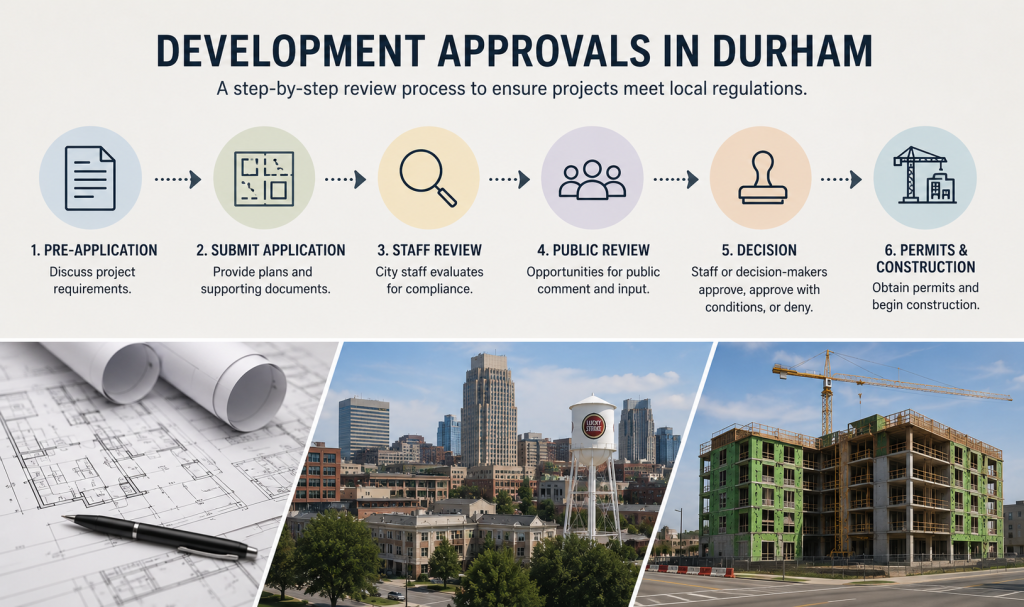
Navigating the development process in Durham involves a range of applications and reviews managed by the joint City-County Planning & Development Department. This department acts as the lead agency for reviewing development proposals and enforcing adopted codes. Project approvals generally follow three distinct paths depending on the nature and complexity of the request.
Administrative Approvals
The vast majority of construction projects fall under “Administrative” or “by-right” approvals. These are granted by professional staff when a project strictly adheres to all existing rules in the UDO. The most common administrative process is the Site Plan Review, which verifies that a proposal complies with requirements for landscaping, parking, and environmental protection. Staff process thousands of these applications annually, including permits for home additions, decks, and accessory structures. To protect builders, Durham recognizes Vested Rights, which ensure that once a project is approved, the owner has the right to complete it under the rules in place at that time, even if regulations change later.
Quasi-Judicial Approvals
For projects that require a degree of discretion or an exception to the rules, a quasi-judicial process is required. These hearings are conducted by boards like the Board of Adjustment (BOA) or the Historic Preservation Commission (HPC). A common example is a Variance, which is a request for an exception to a UDO standard based on a “proven unique hardship” that prevents compliance. Unlike public hearings where anyone can speak, quasi-judicial hearings rely on specific “findings of fact” and expert testimony. Another example is the Major Work Certificate of Appropriateness, required for significant changes to properties within Durham’s local historic districts.
Legislative Approvals
This path is where the rules themselves are created or changed. These decisions are made by elected officials—the City Council or the Durham County Board of Commissioners. The most frequent legislative request is a Zoning Map Change (Rezoning), where a property owner asks to change their land’s designation to allow for a different type of use, such as turning a residential lot into a commercial one. Other legislative actions include Comprehensive Plan Amendments and UDO Text Amendments.
Engagement is a core component of the approval process. For many large-scale applications, developers are required to hold a Neighborhood Meeting to explain their plans, solicit comments, and establish an engagement plan with residents before the formal review begins. Residents can stay informed by signing up for the Planning & Development Public Notification Service, which provides weekly email updates on upcoming public hearings and department announcements.
Keep learning. Stay informed.
Durham is changing rapidly. Explore this website to learn more about the issues shaping Durham’s housing future, and then stay up to date on the latest housing tools, zoning updates, and development facts that impact our neighborhoods. Sign up for our mailing list to get clear information delivered straight to your inbox.